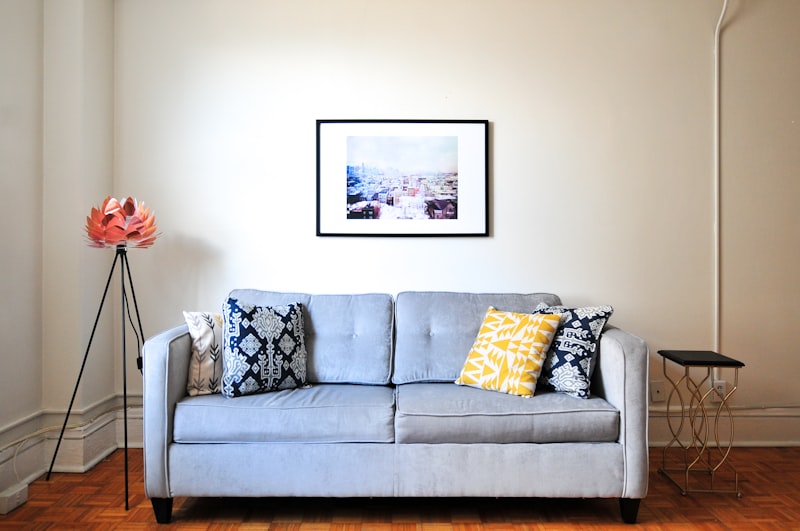
There's a version of minimalism that feels punishing and performance-based — all white surfaces, no personality, the quiet anxiety of keeping everything perfect. That's not what this is about. The minimalism worth pursuing is the practical kind: a home where everything has a place, clutter doesn't accumulate, and you can find things easily. That version is genuinely freeing.
I used to think minimalism meant living with almost nothing — white walls, bare surfaces, a life stripped down to the essentials. I tried it once and felt like I was living in a showroom, not a home. Then I visited a friend who called herself a minimalist but whose home felt warm and personal. She explained her approach: she kept what she used and loved, and let go of everything else. Her home wasn't bare — it was curated. Everything had meaning and purpose. That's when I understood: minimalism isn't about deprivation — it's about intention. It's about surrounding yourself with things that serve you and letting go of everything that doesn't. That shift in thinking changed my relationship with my possessions entirely.
The questions to ask about everything you own
Does this serve a function I actually need? Does it bring me genuine pleasure? Does it have a home — a place where it belongs? If the answer to all three is no, you have your decision. The "maybe" pile is where most people stall — and the honest answer is that a year from now, you won't miss most of what's in it.
When I first tried decluttering, I got stuck in the "maybe" pile for weeks. I couldn't decide what to keep and what to let go of. Then a friend gave me these three questions, and suddenly the decisions became clear. I went through my closet with each item: Do I need this? Does it bring me joy? Does it have a place? The answers were surprising — things I thought I needed failed the test, things I thought I should keep brought me no joy. The "maybe" pile shrank dramatically. A year later, I couldn't even remember what I'd let go of — but I loved everything that remained. Those three questions cut through the noise and helped me focus on what actually mattered.
"Does this serve a function I actually need? Does it bring me genuine pleasure? Does it have a home — a place where it be..."
What always stays
Anything that is genuinely used regularly. Things with sentimental weight that brings you real joy when you see it. Quality objects that serve multiple purposes. Documents, important papers, irreplaceable items. These never need to be questioned.
I used to second-guess everything, even the things I clearly needed and loved. My grandmother's locket that I wore every day — did I really need it? My favorite sweater that I wore weekly — was it too many? Then I realized that minimalism wasn't about getting rid of things I loved — it was about getting rid of things that didn't serve me. The locket brought me joy every time I put it on. The sweater kept me warm and made me feel good. Those weren't clutter — they were essentials. Once I stopped questioning the things that genuinely mattered to me, decluttering became easier. I wasn't depriving myself — I was curating my life.
What almost always goes
Duplicates of things you only need one of. Items kept out of guilt ("someone gave me this"). Things you're keeping for "one day" that one day has never come for in three years. Anything broken that you haven't fixed and won't fix. Outdated versions of things you've already replaced.
I had a closet full of "just in case" items — three identical black skirts, four pairs of jeans that didn't fit, a broken lamp I'd been meaning to fix for two years, gifts from people I barely knew that I kept out of guilt. None of it served me. It just took up space and mental energy. When I finally let it go — donated the clothes, threw away the broken lamp, donated the guilt gifts — I felt lighter. The space felt lighter. I wasn't losing anything I needed; I was clearing space for what actually mattered. The "one day" items were the hardest to let go of, but the truth was that one day had never come, and it probably never would. Letting go was an act of honesty with myself.
"Duplicates of things you only need one of. Items kept out of guilt ("someone gave me this"). Things you're keeping for "..."
The maintenance habit
One in, one out. For every new thing that enters your home, one thing leaves. This single habit, practised consistently, prevents the gradual accumulation that makes decluttering necessary in the first place.
I used to declutter periodically, do a big purge, feel great, and then slowly accumulate again. It was an endless cycle. Then I started the "one in, one out" rule. Every time I bought something new — a sweater, a book, a kitchen gadget — I had to let something go. At first it felt restrictive, but it became liberating. I stopped buying things I didn't truly need because I didn't want to part with something I loved. The accumulation stopped. My home stayed clutter-free without constant purging. The habit became automatic — buy a new sweater, donate an old one. Buy a new book, pass one to a friend. It wasn't about deprivation; it was about balance.
None of this requires a complete overhaul of your life or home. The beauty of small, consistent improvements is that they compound over time in ways that sudden big changes never quite manage. Start with one thing — maybe the three questions, or the one-in-one-out rule. Get comfortable with it. Then add another. Before you know it, minimalism has stopped feeling like a project and started feeling like a way of life.
The people who live minimally aren't necessarily the most disciplined or the most ascetic. They're the ones who've stopped treating their possessions as a measure of their worth and started treating them as tools for living well. That shift in framing is worth more than any decluttering tip I could give you.
Products We Love For This
→ PAVILIA Fluffy Sherpa Throw Blanket — Shop on Amazon
→ Stone & Beam Rustic Linen Napkins Set of 4 — Shop on Amazon
This post contains Amazon affiliate links. If you purchase through our links we may earn a small commission at no extra cost to you. We only recommend products we genuinely rate.