Africa is not a country. It is 54 countries, over 2,000 languages, an astonishing range of ecosystems, and a history that predates any other human civilisation on earth. The idea of "travelling in Africa" is about as useful as "travelling in Eurasia" — it encompasses too much to generalise meaningfully. Which means the first lesson Africa teaches you is humility about what you thought you knew.
I spent six months traveling through East and Southern Africa, and every assumption I arrived with was dismantled within the first week. I expected villages; I found sophisticated cities with tech scenes that rivaled anything in Europe. I expected poverty; I found communities with social support systems that put Western countries to shame. I expected to be the one teaching; I found myself constantly learning — from farmers, from entrepreneurs, from children who spoke three languages and asked questions that made me reconsider my entire worldview. That trip changed me in ways I'm still discovering years later. Africa didn't just show me a continent — it showed me how limited my understanding of the world had been.
The cities that rewrite your assumptions
Nairobi is a sophisticated, fast-moving, tech-forward city — the startup capital of the continent, home to a creative class and a food scene that would impress visitors from anywhere in the world. Lagos is one of the most energetic, overwhelming, and fascinating cities on earth. Accra has a warmth and a contemporary cultural life that catches almost every first-time visitor by surprise. These are not what most people imagine when they imagine "Africa."
My week in Nairobi completely upended my expectations. I'd imagined a dusty, chaotic city — what I found was a place where innovation was happening on every corner. I visited a tech hub where entrepreneurs were building solutions for problems I hadn't even known existed. I ate at restaurants that would have been at home in London or New York. I spent an evening at an art gallery opening where the conversations were about African futurism and reimagining narratives. Nairobi wasn't just modern — it was actively shaping the future. That experience taught me that the Western narrative about African cities being "developing" was fundamentally wrong. These cities aren't catching up to the West; they're building something entirely different, and in many ways, something better.
"Nairobi is a sophisticated, fast-moving, tech-forward city — the startup capital of the continent, home to a creative cl..."
The landscapes that have no comparison
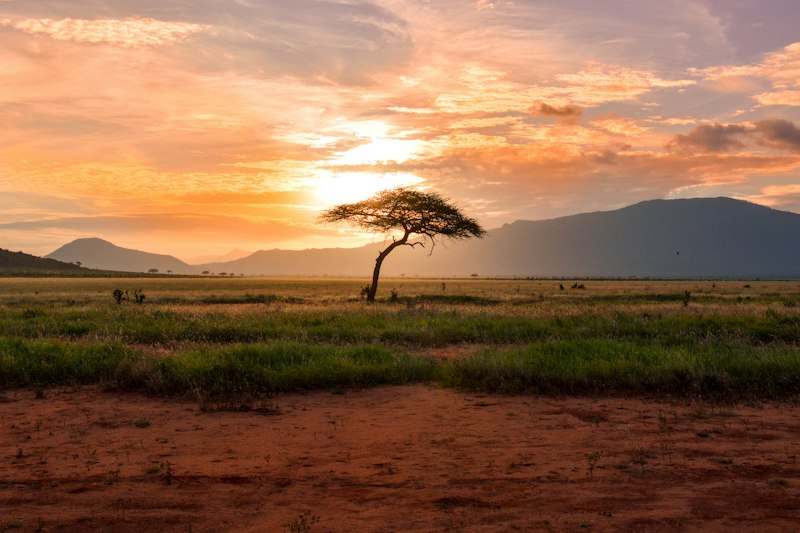
The Serengeti during migration. The Okavango Delta viewed from a mokoro canoe at dawn. The Sahara at night, when the stars are so dense and low they seem tactile. Victoria Falls — the largest waterfall on earth — generating its own weather system, permanently wreathed in spray and rainbows. Ethiopia's Danakil Depression, one of the hottest and most geologically active places on the planet's surface. These are not places that can be adequately prepared for. They are places that simply have to be experienced.
I spent three days in the Okavango Delta, and the experience was unlike anything I'd ever known. We traveled by mokoro — traditional dugout canoes — through channels that wound through reeds and papyrus. Our guide was a man who'd grown up in the delta, who knew every bird call, every ripple in the water, every place where hippos might be hiding. At dawn, the mist rose off the water like something from a dream. We watched elephants cross the channel in silence, so close I could hear them breathing. That landscape — the stillness, the abundance of life, the sense of being somewhere ancient and wild — affected me in a way I still can't fully articulate. It wasn't just beautiful; it was humbling. It reminded me that human concerns are small in the face of something that has existed for millions of years.
The hospitality
Across every country I've visited on the continent, the hospitality extended to visitors — the generosity with food, time, conversation, and genuine welcome — has consistently exceeded anything I've experienced anywhere else. This is not a tourist observation. It's a cultural value, expressed differently in different places, but present almost everywhere. It is humbling and it is real.
In a small village in Tanzania, I was invited to a family's home for dinner. They had very little materially, but they insisted on feeding me the best food they had. We sat on mats on the floor, eating with our hands, talking through a translator about their lives, their hopes for their children, their questions about my country. At the end of the meal, the father refused to let me pay anything — "You are our guest," he said. That kind of generosity wasn't unique to that family. I experienced it repeatedly across the continent — people giving freely despite having little, welcoming strangers with an openness that made me question the individualism I'd grown up with. The hospitality wasn't performative; it was genuine, rooted in values of community and shared humanity that Western societies have largely forgotten.
"Across every country I've visited on the continent, the hospitality extended to visitors — the generosity with food, tim..."
What it changes in you
Travel in Africa recalibrates your relationship with time, with material comfort, with what constitutes necessity versus luxury, and with the extraordinary diversity of ways there are to live a human life. You come back with your assumptions about the world measurably altered. That is the most valuable thing travel can do — and Africa does it more reliably than almost anywhere else.
When I returned from my six months in Africa, everything felt different. I found myself impatient with Western complaints about minor inconveniences. I questioned the obsession with accumulation that drives so much of Western life. I realized how much I'd taken for granted — not just material comfort, but the assumption that my way of living was somehow superior. That trip didn't just show me a different continent; it showed me a different way of being human. The communities I visited had less materially but more connection — stronger families, deeper friendships, a sense of belonging that most Westerners spend their entire lives searching for. I came back not wanting to replicate their lives, but wanting to bring some of that wisdom home. That's the real gift of travel in Africa — it doesn't just show you the world; it shows you yourself.
Products We Love For This
→ Hidden Money Belt Travel Security Pouch — Shop on Amazon
This post contains Amazon affiliate links. If you purchase through our links we may earn a small commission at no extra cost to you. We only recommend products we genuinely rate.
Plan Your Trip
Everything you need — curated and ready to book
This post contains affiliate links. We earn a small commission at no extra cost to you.