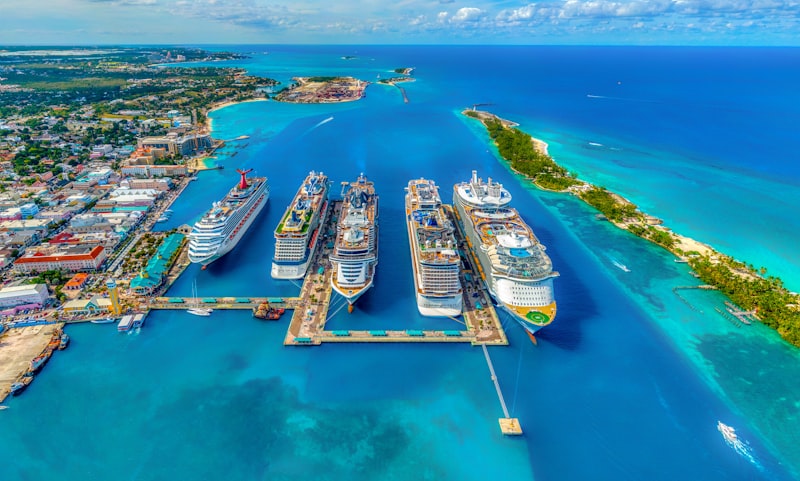
The Caribbean is a geographical region, not a single place. Its islands span three island groups, multiple languages, dozens of distinct cultures, and landscapes ranging from Dutch-colonial painted towns to volcanic peaks to salt flats that turn flamingo-pink at dusk. Treating it as one interchangeable resort destination is one of travel's great missed opportunities.
I spent years visiting the Caribbean the way most people do — all-inclusive resorts, famous beaches, the usual suspects. It wasn't until I started seeking out the lesser-known islands that I understood what the region actually offers. On Dominica, I hiked through rainforest to a boiling lake that felt like something from another planet. On Saba, I dove into water so clear I could see the ocean floor sixty feet below. These weren't beach vacations — they were genuine adventures that showed me a Caribbean most travelers never see.
Dominica: the nature island
Not to be confused with the Dominican Republic — Dominica is a small, wild, barely-touched island that receives fewer than 100,000 visitors a year. It has no famous beaches (volcanic black sand, mostly). What it has is extraordinary: the Boiling Lake, accessible via a challenging hike through otherworldly landscapes. Ancient rainforest covering 60% of the island. Whale watching that ranks among the best in the world. It's genuinely unlike anywhere else in the region.
The hike to the Boiling Lake was one of the most challenging I've ever done — three hours through mud, steam vents, and terrain that felt prehistoric. When I finally reached the lake, bubbling and steaming in its volcanic crater, I understood why Dominica calls itself the Nature Island. It wasn't just beautiful — it was powerful, almost overwhelming in its raw natural force. That evening, soaking in hot springs after the hike, I felt more alive than I had in months. Dominica doesn't pamper you — it challenges you, and that's precisely its gift.
"Not to be confused with the Dominican Republic — Dominica is a small, wild, barely-touched island that receives fewer th..."
Sint Eustatius: step back in time
A tiny Dutch Caribbean island that was once one of the most important trading ports in the Atlantic world — the place where the first foreign salute to the American flag was fired in 1776. Today it receives perhaps 10,000 visitors a year. The ruins of the old trading city of Oranje are extraordinary. The diving over the sunken 18th-century warehouses is world-class. Almost nobody knows it exists.
I arrived on Statia expecting a quiet day trip and left three days later. The island has a quality of stillness that's increasingly rare — no cruise ships, almost no development, just ruins and ocean and a handful of people who genuinely seem to value the quiet. I spent an entire afternoon wandering through the Fort Oranje ruins alone, imagining what this place must have looked like in its 18th-century heyday. The diving over the sunken warehouses was like swimming through history — coral-encrusted bricks, anchors, the physical remains of a trading empire. It's a place that rewards the traveler who's willing to seek out the obscure.
Trinidad: culture over coast
Trinidad is not a beach destination in the conventional sense — and that's exactly why it's worth going. Carnival here is the original, the source event, and experiencing it is unlike anything else on earth. The food is extraordinary and genuinely multicultural — Indian, African, Chinese, Creole, Spanish all in one cuisine. The birdwatching in the Asa Wright Nature Centre is world-renowned. It's a Caribbean island that rewards the curious rather than the beach-seeker.
I visited Trinidad during Carnival season, which was chaotic and overwhelming in the best possible way. The energy in Port of Spain was electric — costumes, music, a kind of collective joy I'd never experienced before. But what surprised me most was the food. I had doubles for breakfast from a street vendor who had been making them for thirty years, roti that tasted like history, and curries that told the story of the island's Indian heritage. Trinidad isn't about relaxing on a beach — it's about diving headfirst into a culture that's vibrant, complicated, and utterly alive.
"Trinidad is not a beach destination in the conventional sense — and that's exactly why it's worth going. Carnival here i..."
Saba: the unspoiled queen
Five square miles of volcanic mountain rising from the sea. No beaches, no resorts, no cruise ship crowds — by choice and by geography. Saba has chosen to remain small and quiet and extraordinary. The diving is considered among the best in the Caribbean. The hiking to Mount Scenery, through cloud forest, is remarkable. It's a place that asks something of you and gives back considerably more than you brought.
Saba is the kind of place that makes you question what you actually want from travel. The island has no beaches — you arrive by boat and climb a steep road to the main village. I hiked Mount Scenery in the fog, surrounded by cloud forest and the sound of wind through the trees. At the summit, the view was mostly clouds, but the feeling of being somewhere genuinely wild was unforgettable. The diving was equally extraordinary — walls dropping into the deep, sea turtles, coral reefs that felt untouched. Saba doesn't try to be anything it's not, and that authenticity is increasingly rare in the Caribbean.
Products We Love For This
→ Cipway Compression Packing Cubes — Shop on Amazon
→ Ekster Travel Pack Vacuum Kit - Travel Vacuum — Shop on Amazon
This post contains Amazon affiliate links. If you purchase through our links we may earn a small commission at no extra cost to you. We only recommend products we genuinely rate.
Plan Your Trip
Everything you need — curated and ready to book
This post contains affiliate links. We earn a small commission at no extra cost to you.